
Robusta vs Arabica: Two Species, Not a Ranking
Arabica and Robusta are different coffee species with different strengths. Here's how they differ in taste, caffeine and growing conditions — and why one doesn't need to be put down for the other to shine.

Walk into almost any conversation about "good coffee" and you'll hear the same rule: Arabica good, Robusta second best. We started RAWNG because we wanted to know who decided that.
Two different species
Arabica and Robusta aren't a premium and a budget version of the same plant. They're two different species:
- Arabica — Coffea arabica
- Robusta — Coffea canephora (Robusta is the best-known variety of this species)
They grow differently, taste different and suit different cups. Comparing them as "better" and "worse" is a bit like ranking tea against coffee.
How they taste
| Arabica | Robusta | |
|---|---|---|
| Typical flavour | Brighter, sweeter, more acidity | Bolder, earthier, more bitterness |
| Body | Lighter to medium | Fuller, heavier |
| Caffeine | Lower | Higher — often close to double |
| Crema (espresso) | Thinner | Thicker, longer-lasting |
These are tendencies, not laws. Origin, processing and roast move the needle a lot — a carefully sun-dried, well-roasted Robusta can be smooth and chocolatey, and a poorly handled Arabica can be flat.
How they grow
Arabica generally prefers higher altitudes and cooler conditions. Robusta is hardier: it handles warmer climates and is more resistant to many pests and diseases, which is part of how it got its name.
Robusta is already India's story
India is one of the world's important coffee-growing countries, and Robusta makes up the larger share of its production. From Chikkamagaluru and Kodagu in Karnataka to Wayanad in Kerala, Robusta isn't the alternative here — it's the backbone.
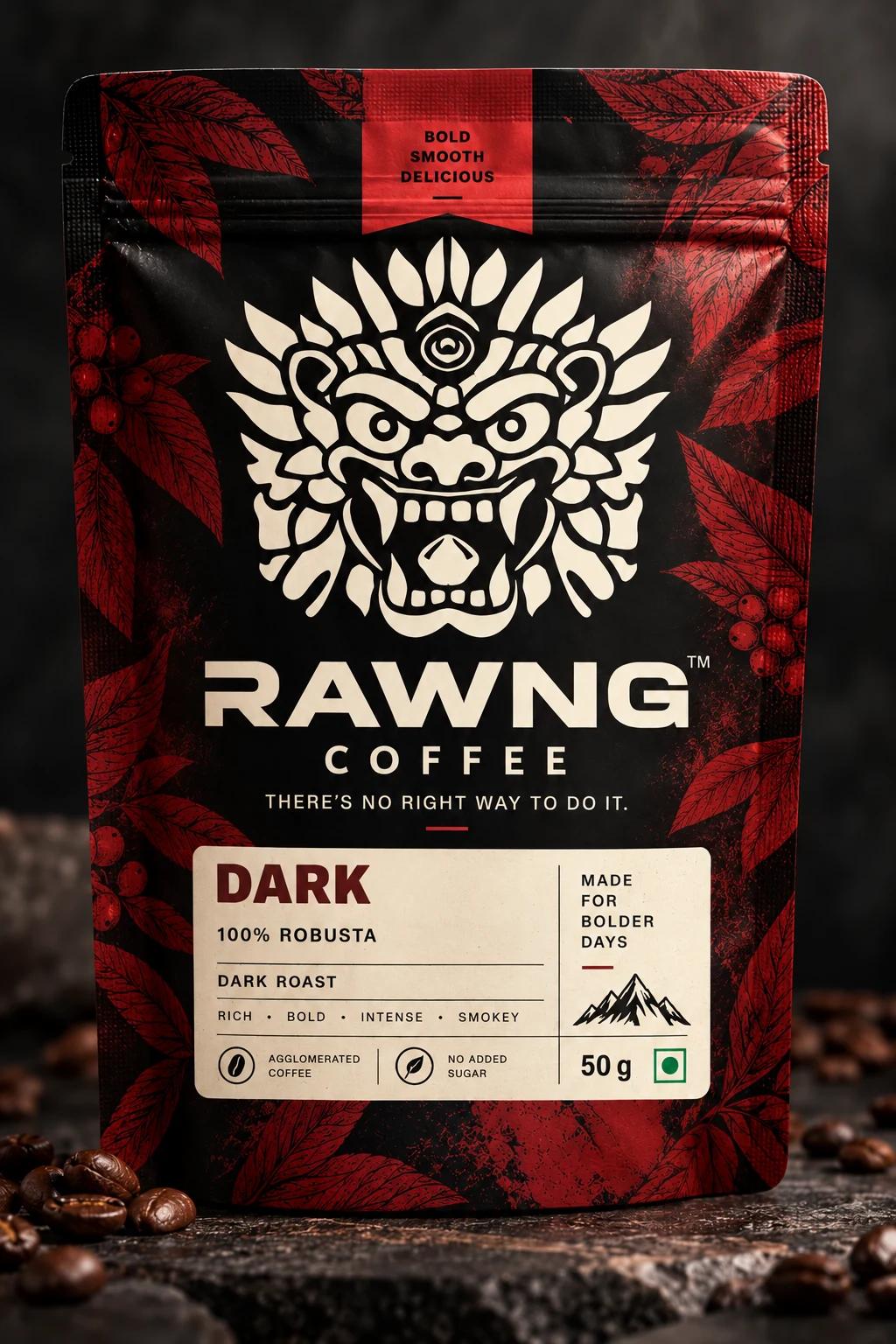
The RAWNG Dark you can buy from us, for example, is 100% Robusta Cherry AAA, sun dried at Prakash Estate in Mudigere at 1,100 metres.
So which should you drink?
Both. Try them side by side:
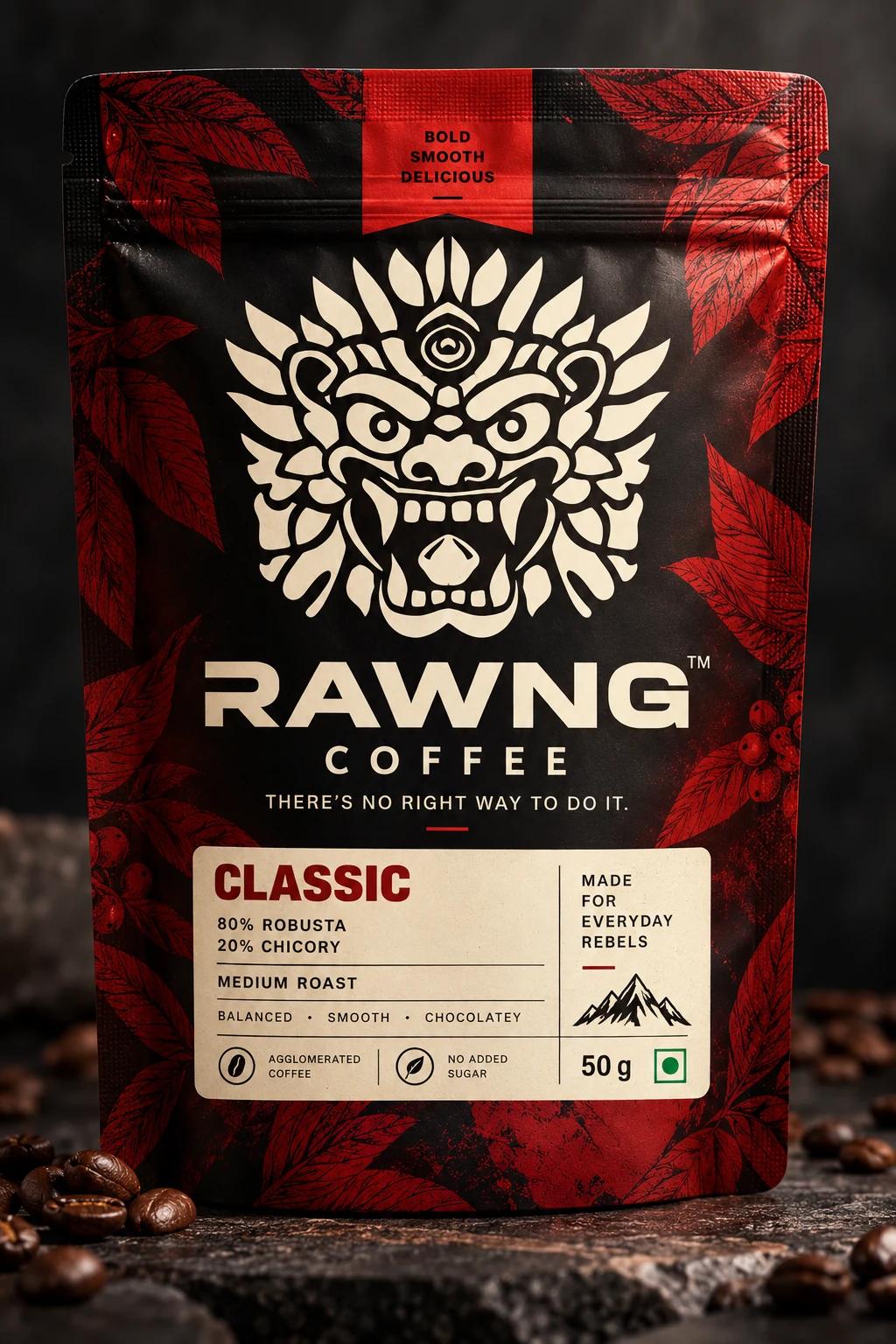
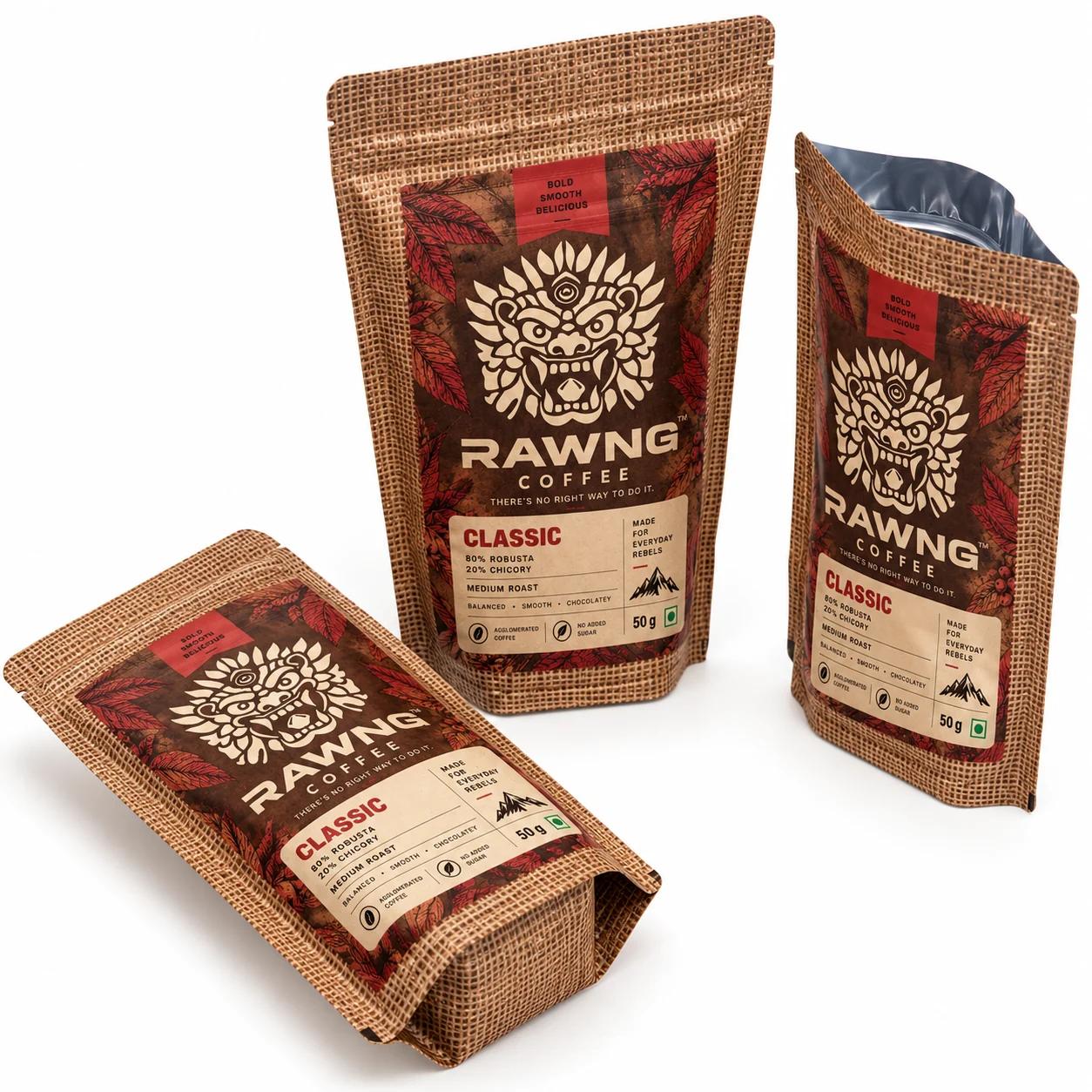
- For bold, strong, milky cups — start with a Robusta-led coffee like RAWNG Classic (80% Robusta, 20% Arabica) or RAWNG Dark (100% Robusta).
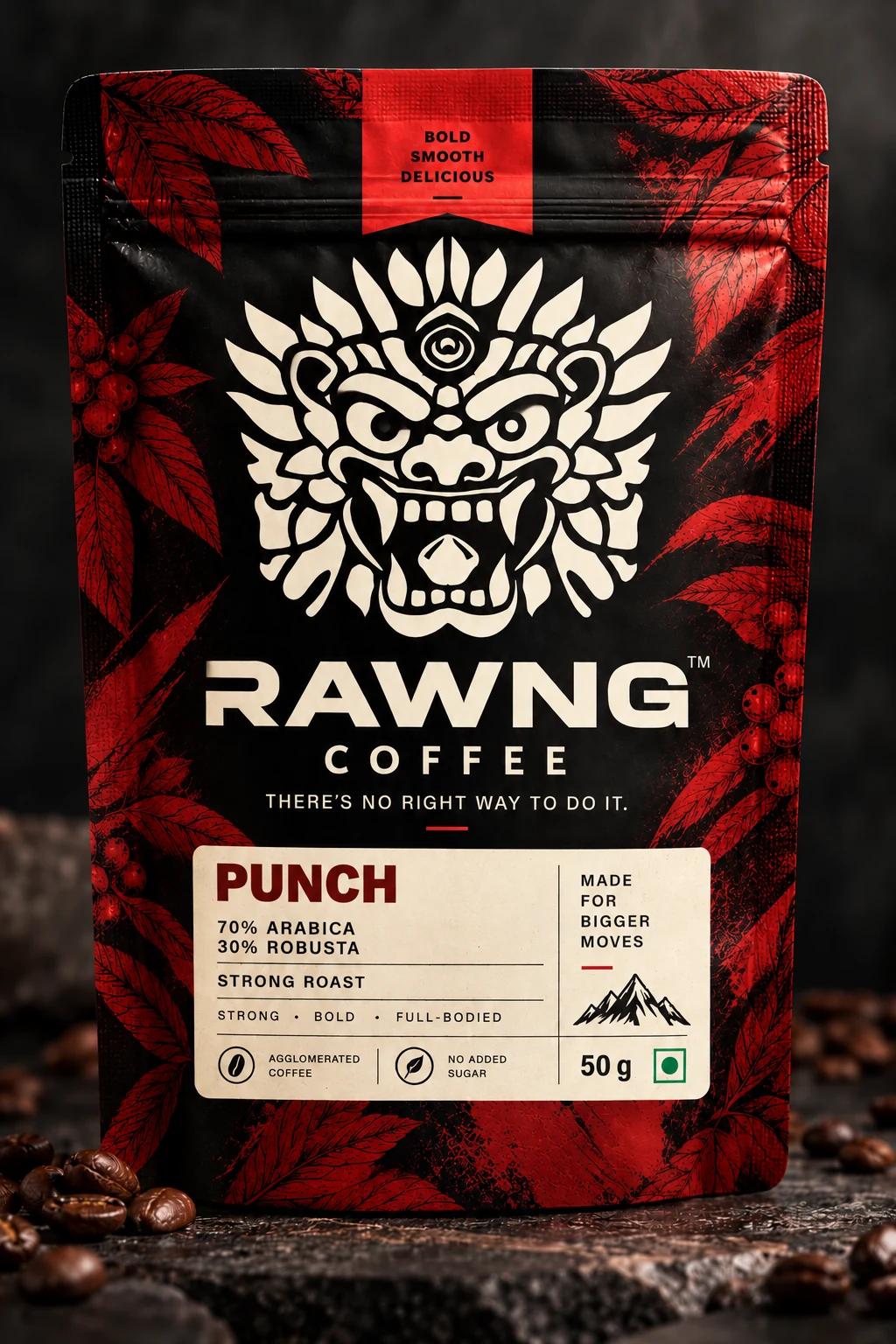
- For a balance of brightness and body — try RAWNG Punch (60% Arabica, 40% Robusta).
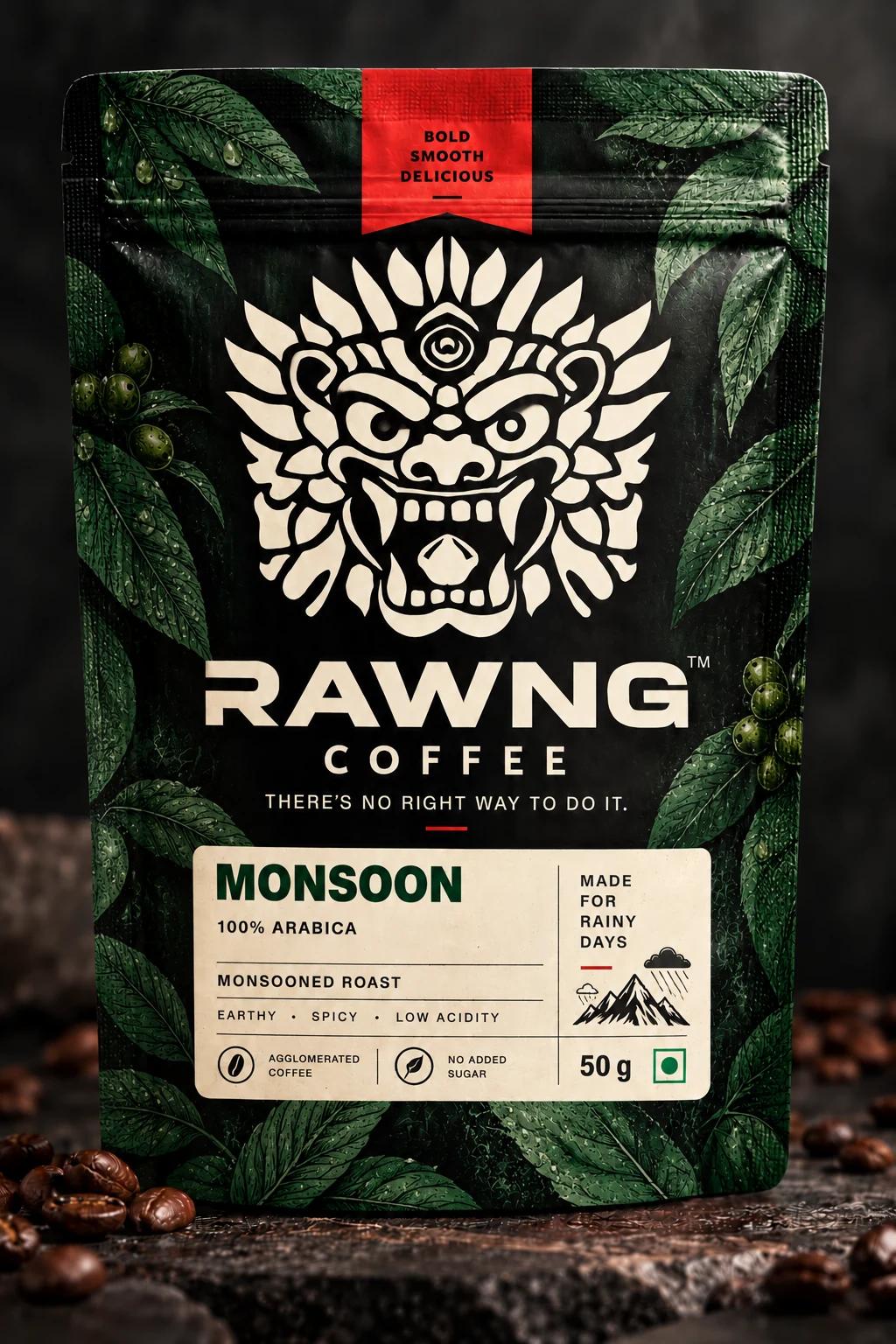
- For sweet, bright, lighter cups — try an Arabica like RAWNG Peaberry.
Then decide for yourself. That's the whole point: think beyond the rules.
Frequently asked questions
Is Robusta coffee bad?
No. Robusta is a different species with its own character — fuller body, bolder bitterness and more caffeine. Well-grown, well-processed Robusta makes an excellent cup, especially in strong coffee, milk-based drinks and espresso blends.
Does Robusta have more caffeine than Arabica?
Generally, yes. Robusta beans usually contain noticeably more caffeine than Arabica beans — often close to double, depending on the lot.
Which is better for milk coffee?
Robusta's body and bold flavour carry well through milk, which is why it's common in Indian filter-style and milky coffees. Blends like RAWNG Classic (80% Robusta, 20% Arabica) are built for exactly that.
Where is Robusta grown in India?
Mainly in Karnataka and Kerala, with Karnataka's Chikkamagaluru, Kodagu and Hassan districts among the best-known regions.